

































INNOVATIV
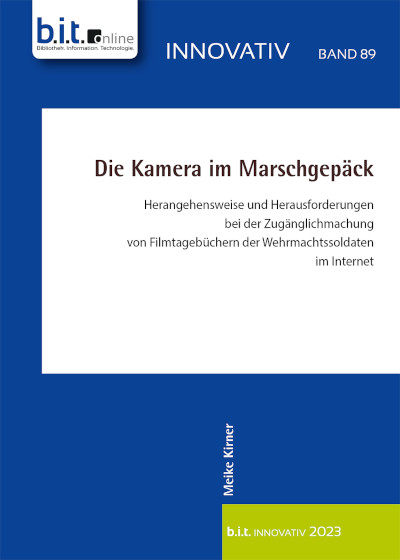
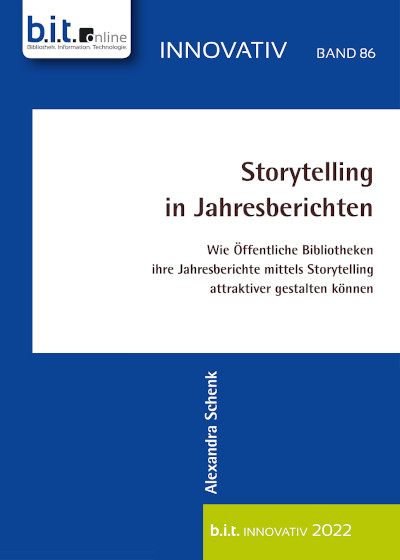
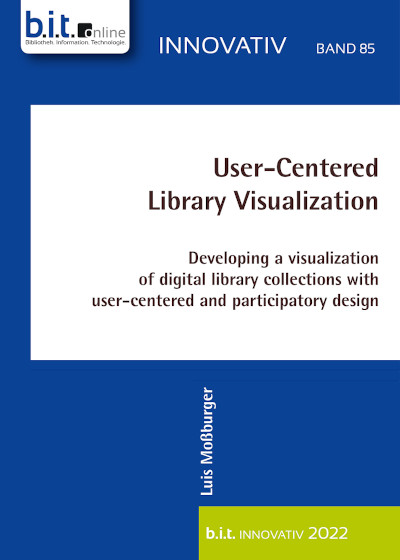
Band 79: Janet Wagner Band 78: Philip Franklin Orr Band 77: Carina Dony Band 76:
Linda Freyberg
Sabine Wolf (Hrsg.)
Band 75: Denise Rudolph Band 74: Sophia Paplowski Band 73: Carmen Krause Band 72:
Katrin Toetzke
Dirk Wissen
Band 71: Rahel Zoller Band 70: Sabrina Lorenz Band 69: Jennifer Hale Band 68:
Linda Schünhoff
Benjamin Flämig
Band 67:
Wilfried Sühl-Strohmenger
Jan-Pieter Barbian
Band 66: Tina Schurig Band 65: Christine Niehoff Band 64: Eva May Band 63: Eva Bunge Band 62: Nathalie Hild Band 61: Martina Haller Band 60: Leonie Flachsmann Band 59: Susanne Göttker Band 58: Georg Ruppelt Band 57: Karin Holste-Flinspach Band 56: Rafael Ball Band 55: Bettina Schröder Band 54: Florian Hagen Band 53: Anthea Zöller Band 52: Ursula Georgy Band 51: Ursula Jaksch Band 50: Hermann Rösch (Hrsg) Band 49: Lisa Maria Geisler Band 48: Raphaela Schneider Band 47: Eike Kleiner
Bestellen Sie jetzt online!
5. März 2026
  WEITERE NEWS
Aktuelles aus
L
ibrary
Essentials

In der Ausgabe 02/2026 (März 2026) lesen Sie u.a.:

  • Seniorinnen und Senioren entdecken soziale Netzwerke – Chancen und Aufgaben für Bibliotheken
  • Chatbots im Auskunftsdienst wissenschaftlicher Bibliotheken
  • Bibliotheken unter Druck – Was der Hamburger Sparkurs über den Zustand
    des Wissenschaftssystems verrät
  • Die „Big Three“ der Wissenschaftsinformation – Web of Science, Scopus und OpenAlex im systematischen Vergleich
  • Der Strukturwandel im italienischen Buchmarkt – Lehren für Europa,
    die Leseförderung, den Buchhandel
    und Künstliche Intelligenz
  • GenAI in der Hochschulbildung –
    Wer forscht weltweit zu ChatGPT und Co.?
  • Jenseits des Akronyms –
    Wie wissenschaftliche Bibliotheken DEI
    unter politischem Druck neu verankern
  • Kann Bibliotherapie helfen, die Krisen
    der Gegenwart zu bewältigen?
  • Web-Barrierefreiheit pragmatisch umsetzen – Kleine Schritte mit großer Wirkung
  • Wenn die KI die Nachrichten auswählt, verändert sich die öffentliche Wahrnehmung
  • Zwischen Plattformökonomie und kulturellem Gedächtnis – Hat das physische Medium noch eine Zukunft?
u.v.m.
  fachbuchjournal

Portland Academic Health Libraries Consortium
Selects Ex Libris Primo and Alma

PAHL is the latest consortium to replace legacy systems
and move to Ex Libris for resource management and discovery

Ex Libris® Group is pleased to announce that the Portland Academic Health Libraries (PAHL) consortium has selected the Primo® discovery and delivery solution and the Alma resource management service. PAHL members are  the National College of Natural Medicine, Oregon Health & Science University, Oregon College of Oriental Medicine, and University of Western States. Replacing their Innovative Millennium systems, these schools are joining a community of over 120 institutions that have selected Alma, many of which are replacing systems from other vendors.

The consortium has chosen Alma to transform its libraries’ methods of operation and even more important, the way in which they manage their collaboration with a diverse range of partners both in the region and further afield. Oregon Health & Science University is also a member of the Orbis Cascade Alliance, which recently adopted Alma. Chris Shaffer, university librarian at Oregon Health & Science University, commented: “In addition to enabling PAHL to maintain and improve traditional consortium services such as resource sharing, Alma will also provide a range of new collaborative services. We are looking forward to  changing the way we manage our libraries behind the scenes, and we are especially excited about offering our users a unified discovery experience that will enable them to access the consortium’s extensive specialized health collections via a single interface.”

“We are pleased to welcome another academic library consortium to the North American Alma community,” remarked Mark Triest, president of Ex Libris North America. “Alma is proving to be a game changer for consortia, by enabling libraries to cooperate and create new services that were not possible until now. Through the system’s tight integration with Primo, library users can search for and access information within a seamless discovery experience, a particular benefit to consortia such as PAHL that are sharing collections across sites.”

www.exlibrisgroup.com