



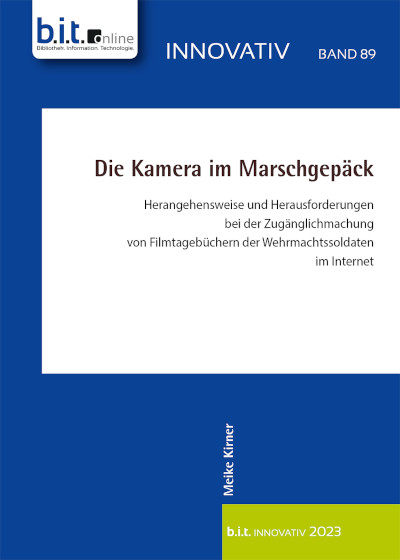
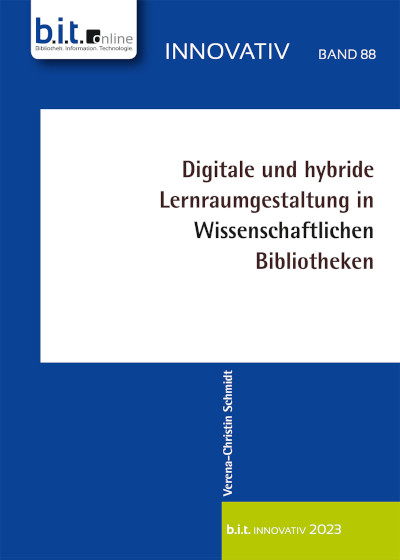
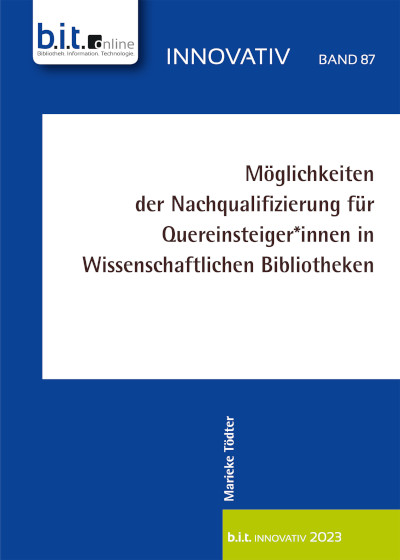






















INNOVATIV
Band 79: Janet Wagner Band 78: Philip Franklin Orr Band 77: Carina Dony Band 76:
Linda Freyberg
Sabine Wolf (Hrsg.)
Band 75: Denise Rudolph Band 74: Sophia Paplowski Band 73: Carmen Krause Band 72:
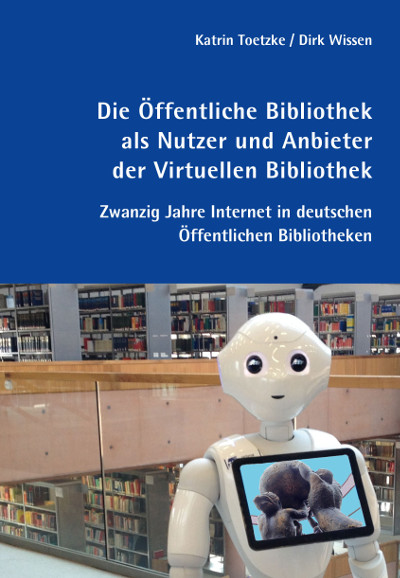
Katrin Toetzke
Dirk Wissen
Band 71: Rahel Zoller Band 70: Sabrina Lorenz Band 69: Jennifer Hale Band 68:
Linda Schünhoff
Benjamin Flämig
Band 67:
Wilfried Sühl-Strohmenger
Jan-Pieter Barbian
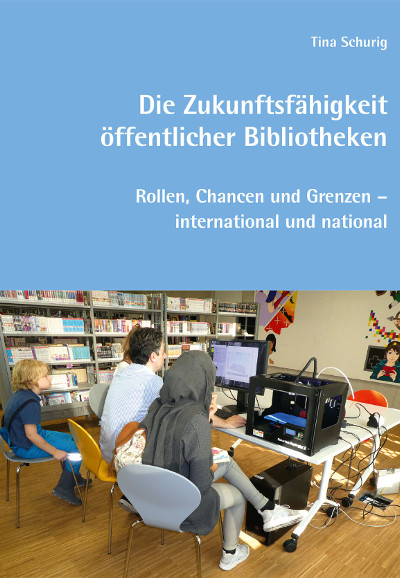
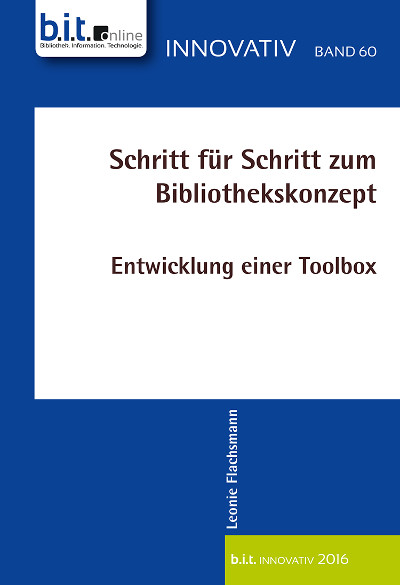
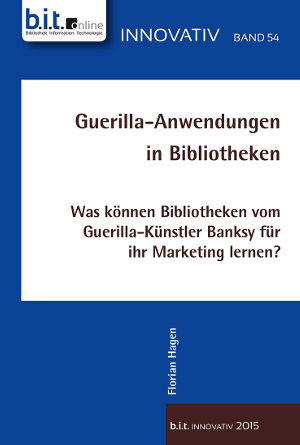
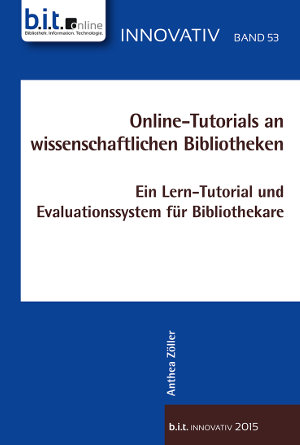
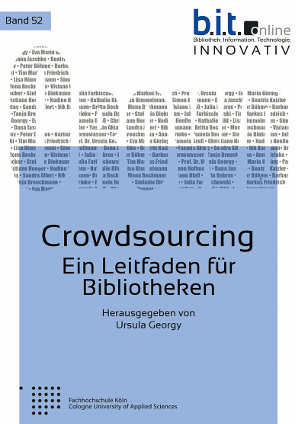
Band 66: Tina Schurig Band 65: Christine Niehoff Band 64: Eva May Band 63: Eva Bunge Band 62: Nathalie Hild Band 61: Martina Haller Band 60: Leonie Flachsmann Band 59: Susanne Göttker Band 58: Georg Ruppelt Band 57: Karin Holste-Flinspach Band 56: Rafael Ball Band 55: Bettina Schröder Band 54: Florian Hagen Band 53: Anthea Zöller Band 52: Ursula Georgy Band 51: Ursula Jaksch Band 50: Hermann Rösch (Hrsg) Band 49: Lisa Maria Geisler Band 48: Raphaela Schneider Band 47: Eike Kleiner
Bestellen Sie jetzt online!
21. April 2026
  WEITERE NEWS
Aktuelles aus
L
ibrary
Essentials

In der Ausgabe 03/2026 (April 2026) lesen Sie u.a.:

  • Nationales Kultur­erbe unter Druck: Der Stopp des DNB-Erweiterungsbaus und seine Folgen
  • Entwicklungen im Medienalltag
  • Vom Datenhype zur Datenkompetenz: Warum Data Literacy zur Kernaufgabe
    von Bibliotheken wird
  • Warum Bibliotheken bei KI, Lizenzen
    und Fair Use mitreden müssen
  • Entwicklungen für die Zukunft
    von Bibliotheken
  • Forschungsdaten als Publikationsform
  • Wie Forschende mit KI-gestützten Recherchetools arbeiten
  • KI-Erschöpfung und „Vocational Awe“
    in wissenschaftlichen Bibliotheken
  • Aufmerksamkeitskrise oder Designproblem? Was Bibliotheken aus der Debatte über Lesen und Bildschirme lernen können
  • Die Stiftsbibliothek St. Gallen:
    Ein 1.300 Jahre altes Wissensarchiv
  • Bibliotheken als Räume für Wohlbefinden
    im Gesundheitswesen
  • Das Ende eines Formats: Der Niedergang des Massenmarkt-Paperbacks
u.v.m.
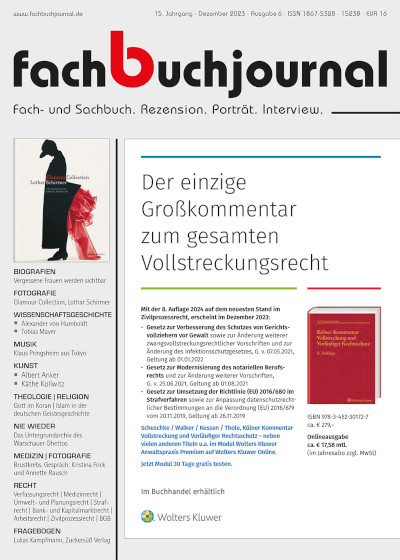
  fachbuchjournal
2009 bis 2023

Institutions in Australia and New Zealand Migrate
to the Next-Generation Ex Libris Discovery Solution

The University of South Australia, University of Western Sydney, and University of Otago
join other sites in the region in selecting Primo

Ex Libris® Group is pleased to announce that the University of South Australia (UniSA), the University of Western Sydney (UWS), and New Zealand’s Otago University have chosen the Ex Libris Primo® discovery and delivery solution to complement their Ex Libris Alma library management service. As a result, these institutions will offer users a unified discovery experience that is seamlessly integrated with library services and operations. At UWS and UniSA, Primo will be replacing Serials Solutions Summon systems.

UniSA University Librarian Helen Livingston explained: “We see this move to Primo as the best means of completely integrating resource management and resource discovery. In addition to the high quality of functionality that we found in Primo relative to other discovery products, our decision to migrate to the Ex Libris discovery solution was influenced by our ongoing collaboration with South Australia’s Flinders University and the University of Adelaide, with whom we adopted Alma. Each of the three institutions has now independently opted to implement Primo.”

“UWS Library selected Primo because it was the best user-facing solution to complement Alma according to our review,” commented Michael Gonzalez, manager of digital discovery and services at the University of Western Sydney. “The ability to offer a single point of access for all the research needs of our users was an important consideration for us. With Primo, our users can search our full wealth of collections and manage their online library experience in one place.”

The University of Otago sees its decision to adopt Primo as a strategic move closely tied to the university’s selection of Alma. University Librarian Howard Amos remarked: “The library is a center of excellence serving the academic objectives of the whole institution. Alma enables us to support the university’s wider goals through collaboration with other organizations and integration with campus-wide systems. By adding Primo to enhance the user experience, we are extending our scholarly potential even further.”

Holley Dumble, Ex Libris director of sales for Australia and New Zealand, noted: “We are very pleased to welcome these leading institutions to the Ex Libris Primo community. The appeal of an integrated framework that encompasses both resource management and discovery is becoming stronger for libraries that want to make a high impact with a lower investment in technology. Because Primo and Alma are offered as cloud-based services, the technical burden for library staff is very small, while the potential benefits in efficiency and the usage of scholarly resources are huge. We are looking forward to working with the universities of South Australia, Western Sydney, and Otago on their upcoming implementations.”

http://www.unisa.edu.au/
http://www.uws.edu.au/
http://www.otago.ac.nz/
www.exlibrisgroup.com