









INNOVATIV
Band 79: Janet Wagner Band 78: Philip Franklin Orr Band 77: Carina Dony Band 76:
Linda Freyberg
Sabine Wolf (Hrsg.)
Band 75: Denise Rudolph Band 74: Sophia Paplowski Band 73: Carmen Krause Band 72:
Katrin Toetzke
Dirk Wissen
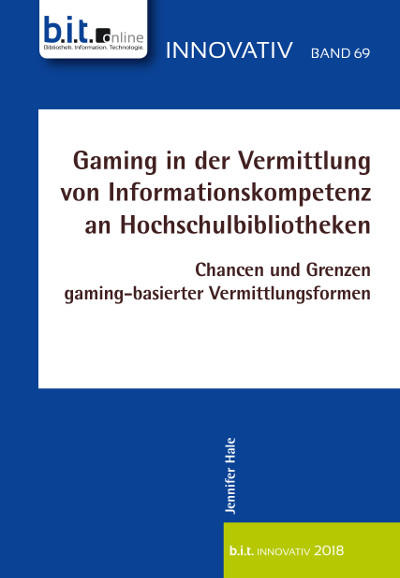
Band 71: Rahel Zoller Band 70: Sabrina Lorenz Band 69: Jennifer Hale Band 68:
Linda Schünhoff
Benjamin Flämig
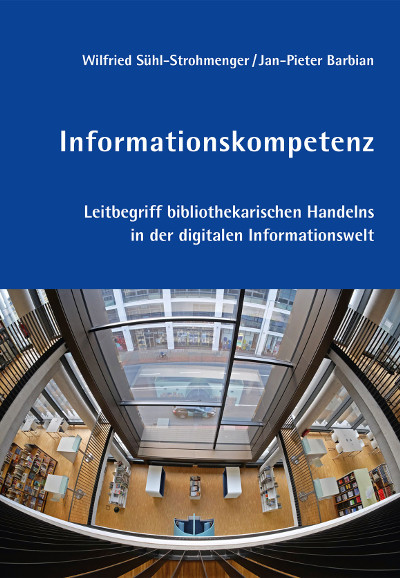
Band 67:
Wilfried Sühl-Strohmenger
Jan-Pieter Barbian
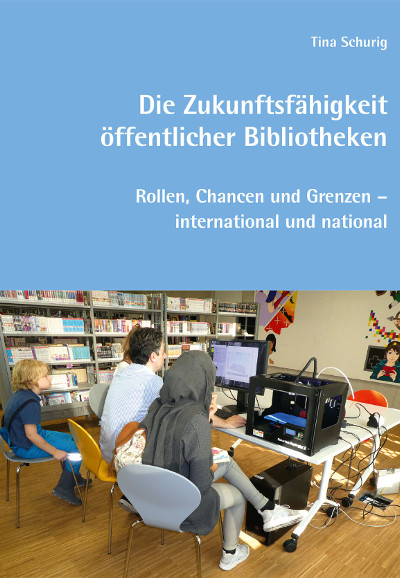
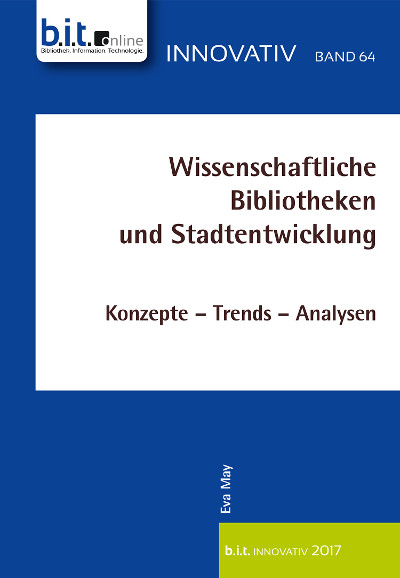
Band 66: Tina Schurig Band 65: Christine Niehoff Band 64: Eva May Band 63: Eva Bunge Band 62: Nathalie Hild Band 61: Martina Haller Band 60: Leonie Flachsmann Band 59: Susanne Göttker Band 58: Georg Ruppelt Band 57: Karin Holste-Flinspach Band 56: Rafael Ball Band 55: Bettina Schröder Band 54: Florian Hagen Band 53: Anthea Zöller Band 52: Ursula Georgy Band 51: Ursula Jaksch Band 50: Hermann Rösch (Hrsg) Band 49: Lisa Maria Geisler Band 48: Raphaela Schneider Band 47: Eike Kleiner
Bestellen Sie jetzt online!
18. März 2026
  WEITERE NEWS
Aktuelles aus
L
ibrary
Essentials

In der Ausgabe 02/2026 (März 2026) lesen Sie u.a.:

  • Seniorinnen und Senioren entdecken soziale Netzwerke – Chancen und Aufgaben für Bibliotheken
  • Chatbots im Auskunftsdienst wissenschaftlicher Bibliotheken
  • Bibliotheken unter Druck – Was der Hamburger Sparkurs über den Zustand
    des Wissenschaftssystems verrät
  • Die „Big Three“ der Wissenschaftsinformation – Web of Science, Scopus und OpenAlex im systematischen Vergleich
  • Der Strukturwandel im italienischen Buchmarkt – Lehren für Europa,
    die Leseförderung, den Buchhandel
    und Künstliche Intelligenz
  • GenAI in der Hochschulbildung –
    Wer forscht weltweit zu ChatGPT und Co.?
  • Jenseits des Akronyms –
    Wie wissenschaftliche Bibliotheken DEI
    unter politischem Druck neu verankern
  • Kann Bibliotherapie helfen, die Krisen
    der Gegenwart zu bewältigen?
  • Web-Barrierefreiheit pragmatisch umsetzen – Kleine Schritte mit großer Wirkung
  • Wenn die KI die Nachrichten auswählt, verändert sich die öffentliche Wahrnehmung
  • Zwischen Plattformökonomie und kulturellem Gedächtnis – Hat das physische Medium noch eine Zukunft?
u.v.m.
  fachbuchjournal
2009 bis 2023

Edison’s Diaries, Lab Journals and Letters Now Available
in ProQuest® History Vault

ProQuest and Rutgers University collaborate to widen access to papers
that document the inventor’s life and work

ProQuest and Rutgers University are teaming to make the University’s acclaimed Thomas A. Edison Papers more accessible to scholars and students around the world. More than 175,000 of Edison’s laboratory notebooks, diaries, business records, correspondence, and other documents will now be available in ProQuest® History Vault, boosting access, precision search and cross-referencing of these documents with other digital archives from the 18th, 19th and 20th centuries. The Thomas A. Edison Papers Collection provides an intimate look at the life, work, and vision of the inventor credited with integrating the worlds of science, technology, movies, business, and finance.

Learn more here: http://bit.ly/1sCYC1v

An inventor, businessman, scientist, industrialist, entrepreneur and engineer, Edison laid the foundation for the age of electricity, recorded sound, motion pictures, and the introduction of modern industrial research. This extraordinary project has carefully gathered the materials from the Edison National Historical Park that document his life and work. With more than 150,000 pages of materials that have never been available online, it encompasses six parts:

  • Five collections that span Edison’s life and work from 1850 through 1919

  • A sixth collection encompasses Motion Picture Catalogs – a source for studying America in transition as filmmakers reflected industrialisation, technological innovation, the changing role of women, race relations, and the birth of new communication and mass entertainment.

Sophisticated digitisation and search technology make crisp reproductions of these materials more accessible than ever before, improving research outcomes in areas as diverse as the history of science and technology, business and economic history, popular culture and film history, as well as social and labor history. 

“This is a very unique resource,” said Susan Bokern, ProQuest vice-president, Information Solutions. “The Edison Papers are a firsthand insight into the mind and the work of the inventor, as well as a stunning look at how technological innovation and cultural change are interrelated. His inventions both reflected and disrupted the cultural practices of his time. Incorporating these papers in ProQuest’s History Vault Program increases their research utility to scholars and broadens their access.”  

ProQuest’s History Vault Program encompasses 11 million pages of digitised primary source content that documents and improves research of the American experience.

  • The Edison Papers’ inclusion in this resource allows cross-searching with other acclaimed collections, including the NAACP Papers, U.S. Military Intelligence Reports and the Black Freedom Struggle in the 20th Century.

  • Developed with controlled vocabulary indexing and full-text, faceted searching, History Vault enables researchers to drill to targeted results. 

  • Users can also opt to page through an entire collection to explore at a more relaxed pace.

  • Major events in history are indexed and those records are accessible through a timeline of events to help put individual documents into historical context. 

  • The resource supports African American Studies, Women’s Studies, American History, Military and Diplomatic History, and Political Science, among other areas. 

  • Institutions can build their collections over time to provide an unparalleled research experience for their students and faculty who would otherwise be unable to access materials dispersed in collections and archives around the world. 

History Vault is one of a rich variety of historical collections from ProQuest that unlock new research insights for students, scholars and librarians around the world. For more than 75 years, the company has partnered with an extraordinary range of organisations and individuals, preserving and building access to information collections. Robust and evolving technology brings that content to researchers where they are, enabling them to explore at will – whether page by page, reviewing full-color scans that are as crisp as the real thing, or via precision search that takes them to the exact nugget of information they’re seeking.

http://www.proquest.com