








INNOVATIV
Band 79: Janet Wagner Band 78: Philip Franklin Orr Band 77: Carina Dony Band 76:
Linda Freyberg
Sabine Wolf (Hrsg.)
Band 75: Denise Rudolph Band 74: Sophia Paplowski Band 73: Carmen Krause Band 72:
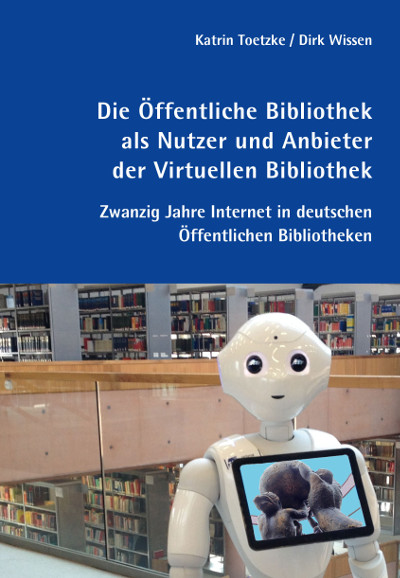
Katrin Toetzke
Dirk Wissen
Band 71: Rahel Zoller Band 70: Sabrina Lorenz Band 69: Jennifer Hale Band 68:
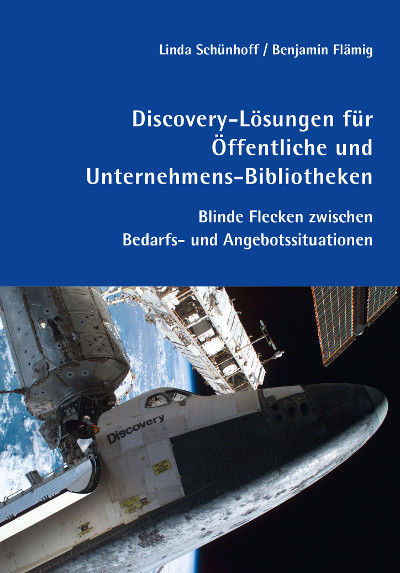
Linda Schünhoff
Benjamin Flämig
Band 67:
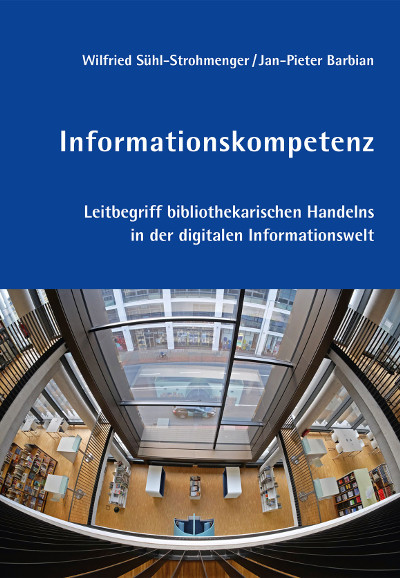
Wilfried Sühl-Strohmenger
Jan-Pieter Barbian
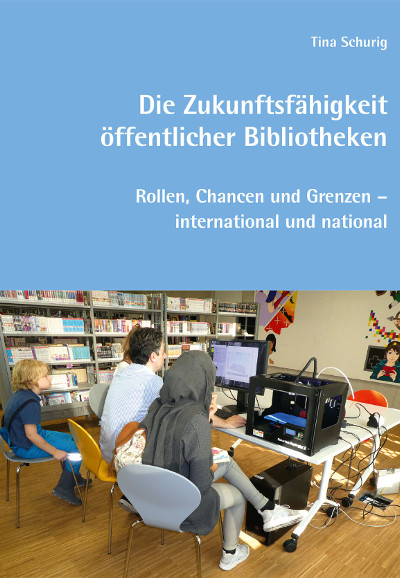
Band 66: Tina Schurig Band 65: Christine Niehoff Band 64: Eva May Band 63: Eva Bunge Band 62: Nathalie Hild Band 61: Martina Haller Band 60: Leonie Flachsmann Band 59: Susanne Göttker Band 58: Georg Ruppelt Band 57: Karin Holste-Flinspach Band 56: Rafael Ball Band 55: Bettina Schröder Band 54: Florian Hagen Band 53: Anthea Zöller Band 52: Ursula Georgy Band 51: Ursula Jaksch Band 50: Hermann Rösch (Hrsg) Band 49: Lisa Maria Geisler Band 48: Raphaela Schneider Band 47: Eike Kleiner
Bestellen Sie jetzt online!
12. November 2025
  WEITERE NEWS
Aktuelles aus
L
ibrary
Essentials

In der Ausgabe 7/2025 (Oktober 2025) lesen Sie u.a.:

  • Wirtschaftlicher Nutzen und Potenziale von Open Science
  • Von der Auskunfts­theke zum Single-Service-Desk: aktuelle Service­modelle in großen wissenschaftlichen Bibliotheken
  • Medienkompetenz und Belastung:
    Eltern unter Druck
  • Was die Gesellschaft zusammenhält:
    Welche Rolle öffentlich-rechtliche Medien heute spielen
  • Neue KI-Skills von Bibliothekar:innen gefragt
  • Stereotype Darstellungen von Bibliothekar:innen durch ChatGPT
  • Digitale Bibliotheken: Barrierefreiheit
    bleibt für blinde und sehbehinderte Menschen oft auf der Strecke
  • Generative KI und die Rolle der Bibliothekar:innen im Fächerkontext
  • Wissenschaftsgeleitet, offen, souverän: Die Allianz der Wissenschaftsorganisationen setzt den Rahmen für Publizieren 2026 bis 2030
  • Wenn die KI-Suche blockiert
  • Unsichtbare Arbeit für Künstliche Intelligenz
  • JSTOR: vom digitalen Archiv
    zur Innovationsplattform
u.v.m.
  fachbuchjournal

ProQuest Chosen by University of Manchester to Digitize Theses

Company’s digitization and curation expertise, extensive metadata creation, and increased discovery factor in the decision to expand partnership

To preserve and promote its world-class research, the University of Manchester has signed a two-year Digital Archiving and Access Program (DAAP) agreement with ProQuest. In the first year alone, ProQuest will digitize thousands of theses, improving worldwide access and preserving them for generations of researchers. 

The discoverability and usage of dissertations can increase exponentially via the ProQuest Dissertations and Theses Global (PQDT) database, which is used at 3,000 universities worldwide. Enhanced with metadata created by subject matter experts, the content is disseminated by 35 major subject and disciplinary indexes.

“Through our ongoing work with ProQuest, we’ve been impressed by the digitization expertise, extensive metadata creation and increased discovery the company provides,” said Sandra Bracegirdle, Head of Content, Collections and Discovery from The University of Manchester Library. “When we sought a solution to help us enhance discoverability and preservation of our extensive legacy collection, ProQuest’s high profile in the promotion of research and theses made them the obvious partner for this endeavor.”

“ProQuest believes in and is always eager to support the important work of our customers. Protecting, preserving and improving the discoverability of excellent research is central to our mission,” said Austin McLean, Director, Scholarly Communication and Dissertations Publishing. “We’re confident that improved accessibility of The University of Manchester’s theses will contribute invaluable research insights for scholars around the globe. It’s an honor to be entrusted with the digitization of these works.”

DAAP is an efficient, cost-effective way to preserve the valuable output of graduate research undertaken at an institution. Digitization increases the visibility of research output within the academic community across a range of dissemination channels. In addition, development of a digital collection of dissertations and theses saves libraries time, reclaims space and reduces costs. ProQuest preserves the content in both analog and digital formats.

The DAAP agreement is an expansion of an existing relationship between the University and ProQuest. The company has been providing Manchester’s students and researchers with access to expertly curated historical archives as well as supplying print and electronic books.

www.manchester.ac.uk/library
http://www.proquest.com