






INNOVATIV
Band 79: Janet Wagner Band 78: Philip Franklin Orr Band 77: Carina Dony Band 76:
Linda Freyberg
Sabine Wolf (Hrsg.)
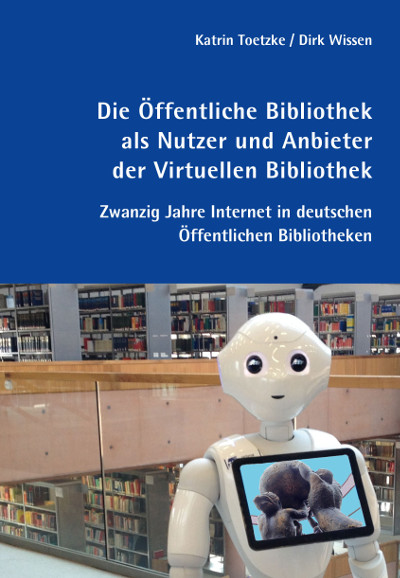
Band 75: Denise Rudolph Band 74: Sophia Paplowski Band 73: Carmen Krause Band 72:
Katrin Toetzke
Dirk Wissen
Band 71: Rahel Zoller Band 70: Sabrina Lorenz Band 69: Jennifer Hale Band 68:
Linda Schünhoff
Benjamin Flämig
Band 67:
Wilfried Sühl-Strohmenger
Jan-Pieter Barbian
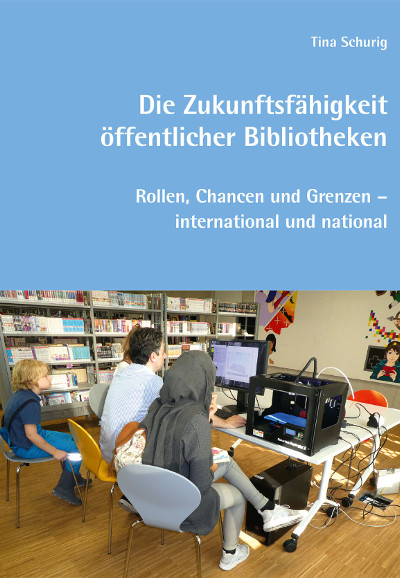
Band 66: Tina Schurig Band 65: Christine Niehoff Band 64: Eva May Band 63: Eva Bunge Band 62: Nathalie Hild Band 61: Martina Haller Band 60: Leonie Flachsmann Band 59: Susanne Göttker Band 58: Georg Ruppelt Band 57: Karin Holste-Flinspach Band 56: Rafael Ball Band 55: Bettina Schröder Band 54: Florian Hagen Band 53: Anthea Zöller Band 52: Ursula Georgy Band 51: Ursula Jaksch Band 50: Hermann Rösch (Hrsg) Band 49: Lisa Maria Geisler Band 48: Raphaela Schneider Band 47: Eike Kleiner
Bestellen Sie jetzt online!
18. Februar 2026
  WEITERE NEWS
Aktuelles aus
L
ibrary
Essentials

In der Ausgabe 10/202501/2026 (Dezember – Januar 2025–2026) lesen Sie u.a.:

  • Soziale Medien und Aufmerksamkeits­entwicklung bei Kindern: Neue Lang­zeitdaten zur ADHS-Risikodiskussion
  • Repositorien im Wandel: Analyse zentraler Einflussfaktoren für die nächsten Jahre
  • Wie inklusiv Sammlungen in Bibliotheken und Archiven wirklich sind
  • Synergien von KI-Chat und Suche:
    Wie unterschiedliche Altersgruppen
    Information Retrieval neu gestalten
  • Kulturerbe-Daten im Zeitalter der KI:
    Ein neues Zugangsmodell für Institutionen
  • Jugendliche, soziale Medien und KI-Chatbots: Digitale Nutzungsrealitäten 2025
  • Buchclubs als unterschätzte Brücke zwischen Campusleben und Bibliothek: Neue Impulse aus US-Hochschulbibliotheken
  • AI Librarian in Japan
  • Altersgrenzen für soziale Medien:
    Europas nächste Regulierungsdebatte
  • KI und Journalismus:
    Neue Machtverschiebungen
    im Markt für Nachrichteninhalte
  • Print ist tot, es lebe Print!
u.v.m.
  fachbuchjournal

IOP Publishing strikes a new unlimited open access agreement
with Max Planck Society

IOP Publishing (IOPP) has established a new, unlimited, transformative open access (OA) agreement with the Max Planck Society, taking an important step forward in the transition of its journals to open access. The three-year agreement, which brings significant advances on their previous agreement, lifts all limitations for Max Planck authors, enabling them to publish all of their articles accepted for publication in IOPP’s full portfolio of 18 fully OA journals and 56 hybrid OA titles openly, with no author-facing APCs.

The Max Planck Society is Germany's leading research organisation, with over 80 affiliated institutes, centres, and facilities around the world, conducting research in the natural sciences, life sciences, social sciences, and the humanities. Thanks to this agreement, the new research produced by the Society’s scientists, selected and peer reviewed in IOPP journals will be freely and immediately accessible to scholars everywhere.

For Max Planck authors, the new agreement makes it easier to publish open access, as the Max Planck Digital Library (MPDL) covers OA publishing fees centrally, omitting the need for authors to validate the availability of OA publishing funds. Additionally, the new agreement extends all previous reading rights to IOPP journal content.

Julian Wilson, Sales and Marketing Director at IOP Publishing says: “Continuing our valued partnership with the Max Plank Society supports our vision of making universal access to physics research a reality. We know that these agreements encourage greater uptake of OA publication. In fact, in 2021, 65% of research from authors affiliated with the Max Planck Society was published OA with us. We now have transformative agreements with 242 institutions in 14 countries and see them as key to accelerating the open access transition. We will continue to proactively secure these agreements in an inclusive and equitable way.”

Ralf Schimmer, Head of Information and Deputy Director of MPDL says: “IOPP is one of the ten most relevant publishers for Max Planck scientists, in terms of where they choose to publish their articles. Through this new agreement, the Max Planck Society can provide authors with the opportunity to reach the broadest possible readership for their articles and fully implement its OA2020 strategy, repurposing former subscription fees to support open access publishing, thereby contributing to the broader open access transition in scholarly communication.”

http://ioppublishing.org