
















INNOVATIV
Band 79: Janet Wagner Band 78: Philip Franklin Orr Band 77: Carina Dony Band 76:
Linda Freyberg
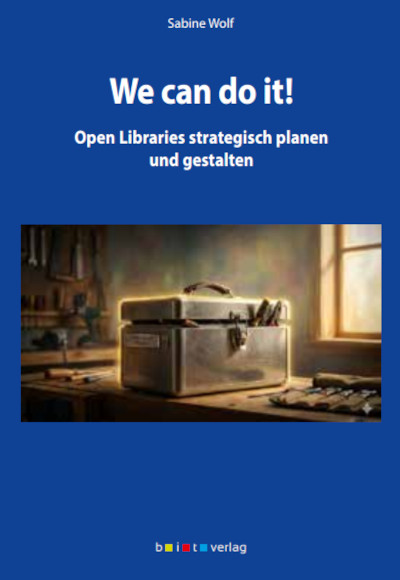
Sabine Wolf (Hrsg.)
Band 75: Denise Rudolph Band 74: Sophia Paplowski Band 73: Carmen Krause Band 72:
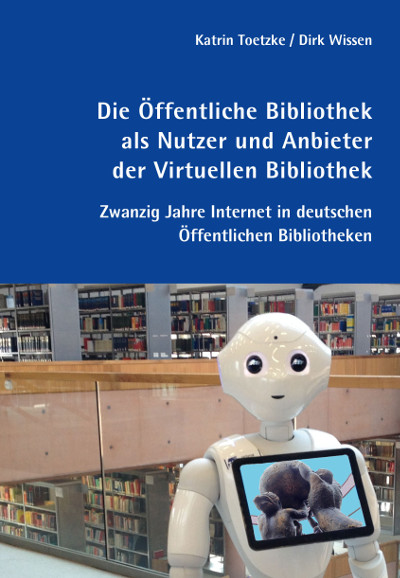
Katrin Toetzke
Dirk Wissen
Band 71: Rahel Zoller Band 70: Sabrina Lorenz Band 69: Jennifer Hale Band 68:
Linda Schünhoff
Benjamin Flämig
Band 67:
Wilfried Sühl-Strohmenger
Jan-Pieter Barbian
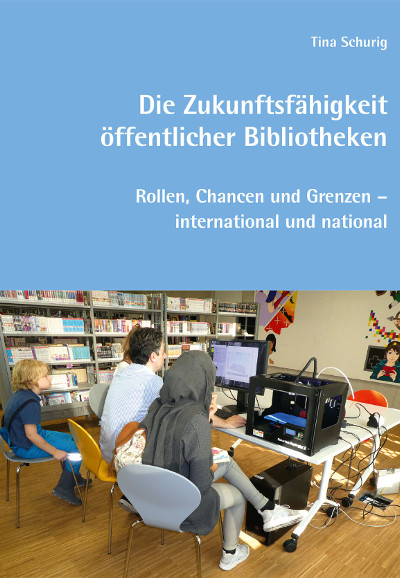
Band 66: Tina Schurig Band 65: Christine Niehoff Band 64: Eva May Band 63: Eva Bunge Band 62: Nathalie Hild Band 61: Martina Haller Band 60: Leonie Flachsmann Band 59: Susanne Göttker Band 58: Georg Ruppelt Band 57: Karin Holste-Flinspach Band 56: Rafael Ball Band 55: Bettina Schröder Band 54: Florian Hagen Band 53: Anthea Zöller Band 52: Ursula Georgy Band 51: Ursula Jaksch Band 50: Hermann Rösch (Hrsg) Band 49: Lisa Maria Geisler Band 48: Raphaela Schneider Band 47: Eike Kleiner
Bestellen Sie jetzt online!
24. März 2026
  WEITERE NEWS
Aktuelles aus
L
ibrary
Essentials

In der Ausgabe 02/2026 (März 2026) lesen Sie u.a.:

  • Seniorinnen und Senioren entdecken soziale Netzwerke – Chancen und Aufgaben für Bibliotheken
  • Chatbots im Auskunftsdienst wissenschaftlicher Bibliotheken
  • Bibliotheken unter Druck – Was der Hamburger Sparkurs über den Zustand
    des Wissenschaftssystems verrät
  • Die „Big Three“ der Wissenschaftsinformation – Web of Science, Scopus und OpenAlex im systematischen Vergleich
  • Der Strukturwandel im italienischen Buchmarkt – Lehren für Europa,
    die Leseförderung, den Buchhandel
    und Künstliche Intelligenz
  • GenAI in der Hochschulbildung –
    Wer forscht weltweit zu ChatGPT und Co.?
  • Jenseits des Akronyms –
    Wie wissenschaftliche Bibliotheken DEI
    unter politischem Druck neu verankern
  • Kann Bibliotherapie helfen, die Krisen
    der Gegenwart zu bewältigen?
  • Web-Barrierefreiheit pragmatisch umsetzen – Kleine Schritte mit großer Wirkung
  • Wenn die KI die Nachrichten auswählt, verändert sich die öffentliche Wahrnehmung
  • Zwischen Plattformökonomie und kulturellem Gedächtnis – Hat das physische Medium noch eine Zukunft?
u.v.m.
  fachbuchjournal
2009 bis 2023

Finalists in Fourth Annual Vesalius Innovation Award
to Benefit from Individualized Mentoring Program

Jury Announces Its Top Five Shortlisted Startups
in the Health Sciences and Publishing Sectors,
To Be Presented and Awarded During STM Week in London.

The fourth year of the Vesalius Innovation Award, with a total of $25,000 in prizes to be granted to the best performers, has announced its top five finalists, who successfully pitched their innovative ideas to the jury: Ludenso, Paindrainer AB, Teraquiz, Global Campus, and Pipra AG.

PIPRA AG is a visionary MedTech start-up based in Zurich, Switzerland, pioneering the development of innovative AI-driven products to address the prevention, prediction, and diagnosis of delirium. Their flagship product, PIPRA (Pre-Interventional Preventive Risk Assessment), offers a user-friendly web and app-based interface for healthcare professionals to accurately assess a patient's risk of developing postoperative delirium (POD). By integrating PIPRA into clinical workflows, healthcare providers can implement targeted preventive strategies, optimize resource allocation, and enhance patient outcomes, particularly for patients aged 60+ undergoing medium to high-risk elective surgery.

Global Campus uses state of the art semantic AI technology to find the best academic content matching your input. Using a summary as your starting point, you will find relevant literature, academic expertise, institutions for collaboration or journals for submission. With Global Campus you navigate the knowledge of the world in seconds, either through our platform or integrated in your systems using our API.

Paindrainer is a digital self-management tool for chronic pain patients powered by an proprietary artificial neural network that is adaptive to patient behavior and provides recommendations on how to adjust daily routines to alleviate pain. Can be offered via Hospitals as a remote monitoring device.

Ludenso addresses healthcare workforce shortages by making medical training more accessible and engaging. By infusing traditional learning materials with interactive 3D animations and AI quizzes, Ludenso improves comprehension and retention at scale.

Teraquiz represents the new era of medical education: digital, accessible at your fingertips, with excellence. Their mobile app is tailor-made for Oncology, Rheumatology, Hematology, Urology, Dermatology, and Radiation Oncology specialists. It offers up-to-date article reviews, a community for discussing challenging cases, evidence-based quizzes, and video content. The company aims to disseminate high-quality medical information in Brazil, Portuguese-speaking nations, and Latin America, closing the educational gap.

Until the end of November each of the five startups will receive individual mentoring through our Partner Startup Academy and our sponsor Park56. The mentorship program will focus on individual growth areas that each startup has selected. The jury will then hear the newly refined pitches and strategies to cast their final vote.

On December 5, 2023, the winner will be announced during a ceremony held during STM Week in London. The winning applicant will receive $15,000, while the two runners-up will be awarded $5,000 each.

After the jury’s evaluation, the top five shortlisted startups will be invited to present their ideas at the STM Week in London in December as an excellent opportunity for the contestants to showcase their innovations to a wider audience and gain valuable exposure.

www.karger.com