































INNOVATIV
Band 79: Janet Wagner Band 78: Philip Franklin Orr Band 77: Carina Dony Band 76:
Linda Freyberg
Sabine Wolf (Hrsg.)
Band 75: Denise Rudolph Band 74: Sophia Paplowski Band 73: Carmen Krause Band 72:
Katrin Toetzke
Dirk Wissen
Band 71: Rahel Zoller Band 70: Sabrina Lorenz Band 69: Jennifer Hale Band 68:
Linda Schünhoff
Benjamin Flämig
Band 67:
Wilfried Sühl-Strohmenger
Jan-Pieter Barbian
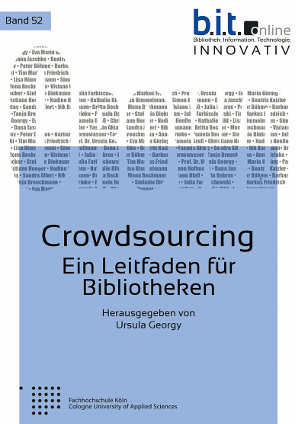
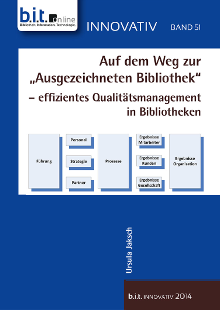
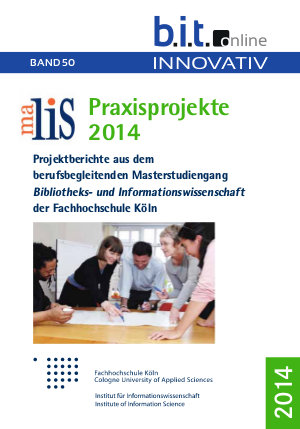
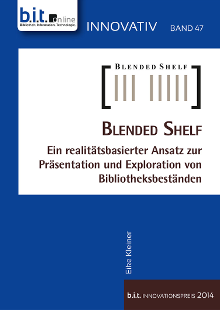
Band 66: Tina Schurig Band 65: Christine Niehoff Band 64: Eva May Band 63: Eva Bunge Band 62: Nathalie Hild Band 61: Martina Haller Band 60: Leonie Flachsmann Band 59: Susanne Göttker Band 58: Georg Ruppelt Band 57: Karin Holste-Flinspach Band 56: Rafael Ball Band 55: Bettina Schröder Band 54: Florian Hagen Band 53: Anthea Zöller Band 52: Ursula Georgy Band 51: Ursula Jaksch Band 50: Hermann Rösch (Hrsg) Band 49: Lisa Maria Geisler Band 48: Raphaela Schneider Band 47: Eike Kleiner
Bestellen Sie jetzt online!
12. November 2025
  WEITERE NEWS
Aktuelles aus
L
ibrary
Essentials

In der Ausgabe 7/2025 (Oktober 2025) lesen Sie u.a.:

  • Wirtschaftlicher Nutzen und Potenziale von Open Science
  • Von der Auskunfts­theke zum Single-Service-Desk: aktuelle Service­modelle in großen wissenschaftlichen Bibliotheken
  • Medienkompetenz und Belastung:
    Eltern unter Druck
  • Was die Gesellschaft zusammenhält:
    Welche Rolle öffentlich-rechtliche Medien heute spielen
  • Neue KI-Skills von Bibliothekar:innen gefragt
  • Stereotype Darstellungen von Bibliothekar:innen durch ChatGPT
  • Digitale Bibliotheken: Barrierefreiheit
    bleibt für blinde und sehbehinderte Menschen oft auf der Strecke
  • Generative KI und die Rolle der Bibliothekar:innen im Fächerkontext
  • Wissenschaftsgeleitet, offen, souverän: Die Allianz der Wissenschaftsorganisationen setzt den Rahmen für Publizieren 2026 bis 2030
  • Wenn die KI-Suche blockiert
  • Unsichtbare Arbeit für Künstliche Intelligenz
  • JSTOR: vom digitalen Archiv
    zur Innovationsplattform
u.v.m.
  fachbuchjournal

Taylor & Francis and DataSeer to Collaborate in
Data-sharing Compliance Checks and Open Science Metrics Pilots

Taylor & Francis – one of the world’s largest research publishers – and DataSeer – an AI solution provider for open science – are excited to announce two parallel pilot projects to address the practical challenges of open research implementation:

  • A joint proof-of-concept pilot project aimed at improving the accuracy and speed of editorial data-sharing checks across a broad range of journals with varying policies.

  • An initial analysis of Open Science Metrics across a sample of 5,000 Taylor & Francis published articles.

Together, the two pilots have the potential to increase data-sharing policy compliance, reduce the editorial workload, and provide business intelligence to help drive openness forward.

Automating editorial data-sharing checks

Taylor & Francis introduced data sharing policies for its journals in 2018, to promote greater openness throughout the research cycle. With more than 2,700 journals spanning all research areas, its data requirements are tiered, tailored to different editorial models, legal and ethical requirements, and disciplinary norms. DataSeer’s tool is uniquely capable of assessing data sharing compliance according to customized standards, and at scale. Compliance Checks analyze individual articles, returning an in-depth compliance report complete with personalized guidance to help researchers fulfill requirements—saving staff time and providing much-needed author support.

The proof-of-concept pilot will assess a broad sample of articles against three different data sharing policies from the Taylor & Francis and F1000 portfolios, to determine how well the automation functions as compared to existing manual editorial checklists. Checks range from the relatively simple tasks such as confirming a data availability statement is present and accounts for all the datasets contained within the article, to more detailed items such as data licensing and file formats, repository use, accurate links, and persistent identifiers.

“This is what Compliance Checks are designed for,” said DataSeer founder and CEO Tim Vines. “We first came up with the idea while performing editorial checks for data policy compliance for the journal Molecular Ecology. It’s exciting to now see it reaching its full potential for broad, large-scale application. This could have a major impact on policy compliance and research reproducibility, while at the same time reducing the administrative burden publishers face.”

“Taylor & Francis is committed to encouraging and supporting authors to adopt open research practices, which have a key role in promoting the integrity, reproducibility and reusability of research,” said Rebecca Taylor-Grant, Head of Open Data Initiatives at Taylor & Francis. “We’re excited by the potential of DataSeer’s tools to help authors follow open research requirements more consistently and to give us valuable insights into open research practices across our portfolio.”

Measuring Open Science across the portfolio

The two organizations will also work together to measure open science practices across 5,000 published Taylor & Francis articles using DataSeer’s Open Science Metrics identify and quantify indicators of open science behavior including data sharing, code sharing, protocol sharing, preprint posting, repository use, and more—providing both top-level stats and individual article-level breakdowns. In addition, Taylor & Francis will also be able to view data by journal, funder, county, and institution.

This open science business intelligence will illuminate trends, identifying areas of strength and opportunities for growth. Armed with accurate data, the publisher can establish meaningful benchmarks, develop strategies, and direct resources where they are needed most, as it works to advance the cause of open scholarship.

https://taylorandfrancis.com/