








































INNOVATIV
Band 79: Janet Wagner Band 78: Philip Franklin Orr Band 77: Carina Dony Band 76:
Linda Freyberg
Sabine Wolf (Hrsg.)
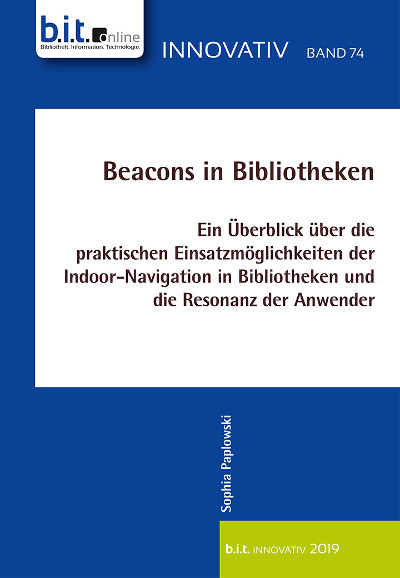
Band 75: Denise Rudolph Band 74: Sophia Paplowski Band 73: Carmen Krause Band 72:
Katrin Toetzke
Dirk Wissen
Band 71: Rahel Zoller Band 70: Sabrina Lorenz Band 69: Jennifer Hale Band 68:
Linda Schünhoff
Benjamin Flämig
Band 67:
Wilfried Sühl-Strohmenger
Jan-Pieter Barbian
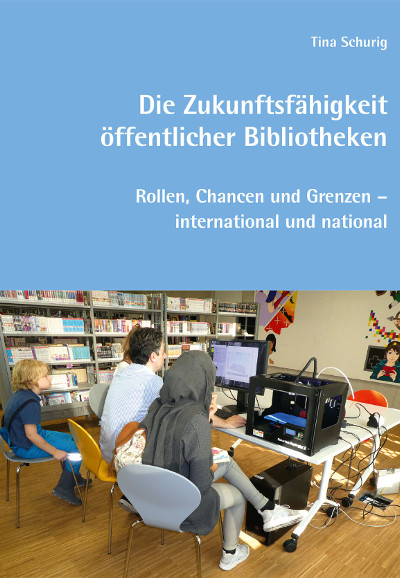
Band 66: Tina Schurig Band 65: Christine Niehoff Band 64: Eva May Band 63: Eva Bunge Band 62: Nathalie Hild Band 61: Martina Haller Band 60: Leonie Flachsmann Band 59: Susanne Göttker Band 58: Georg Ruppelt Band 57: Karin Holste-Flinspach Band 56: Rafael Ball Band 55: Bettina Schröder Band 54: Florian Hagen Band 53: Anthea Zöller Band 52: Ursula Georgy Band 51: Ursula Jaksch Band 50: Hermann Rösch (Hrsg) Band 49: Lisa Maria Geisler Band 48: Raphaela Schneider Band 47: Eike Kleiner
Bestellen Sie jetzt online!
14. März 2026
  WEITERE NEWS
Aktuelles aus
L
ibrary
Essentials

In der Ausgabe 02/2026 (März 2026) lesen Sie u.a.:

  • Seniorinnen und Senioren entdecken soziale Netzwerke – Chancen und Aufgaben für Bibliotheken
  • Chatbots im Auskunftsdienst wissenschaftlicher Bibliotheken
  • Bibliotheken unter Druck – Was der Hamburger Sparkurs über den Zustand
    des Wissenschaftssystems verrät
  • Die „Big Three“ der Wissenschaftsinformation – Web of Science, Scopus und OpenAlex im systematischen Vergleich
  • Der Strukturwandel im italienischen Buchmarkt – Lehren für Europa,
    die Leseförderung, den Buchhandel
    und Künstliche Intelligenz
  • GenAI in der Hochschulbildung –
    Wer forscht weltweit zu ChatGPT und Co.?
  • Jenseits des Akronyms –
    Wie wissenschaftliche Bibliotheken DEI
    unter politischem Druck neu verankern
  • Kann Bibliotherapie helfen, die Krisen
    der Gegenwart zu bewältigen?
  • Web-Barrierefreiheit pragmatisch umsetzen – Kleine Schritte mit großer Wirkung
  • Wenn die KI die Nachrichten auswählt, verändert sich die öffentliche Wahrnehmung
  • Zwischen Plattformökonomie und kulturellem Gedächtnis – Hat das physische Medium noch eine Zukunft?
u.v.m.
  fachbuchjournal

Stanford University Libraries and SirsiDynix Partner
for State-of-the-Art, Original Script Access

Partnership Results in Ground-breaking Support for Chinese,
Japanese and Korean Character Sets

PROVO, UT - Stanford University and SirsiDynix, the global leader in strategic technology solutions for libraries, today officially announced the completion of a project that allows searching and display of the library’s Chinese, Japanese, and Korean holdings in the original scripts. In a previous related project, functionality for searching, sorting, and displaying was made available for Arabic and Hebrew scripts.

Stanford and SirsiDynix worked together for over a year to make support for Asian and other non-Roman character sets a reality in the Stanford environment. In order to make the character sets available and of the highest quality, Stanford and SirsiDynix partnered on the intricate details of searching, sorting, and displaying of multiple character sets in a single collection for both patron and staff access. Stanford Libraries’ language experts assisted and offered enhancement suggestions to culminate in the most accurate, high-quality search solution available. Stanford moved from their original SirsiDynix Unicorn library system to a newer system—SirsiDynix Symphony®—and a Unicode platform to make the character set display possible.

Catherine Tierney, Associate University Librarian for Technical Services at Stanford, said, “This project was a successful partnership between Stanford and SirsiDynix. Stanford Libraries provided language expertise and input to the required functionality, and SirsiDynix development was very responsive. When Stanford discovered issues during testing and implementation, SirsiDynix worked hard and ensured critical needs were addressed before production implementation.”

Finding information in other language scripts is crucial to many Stanford scholars. In fact, states Assunta Pisani, Associate University Librarian for Collections and Services at Stanford, "Offering native character support for our Chinese, Japanese, Korean, Hebrew and Arabic scholars has been a critical priority for Stanford University Libraries, and we are delighted finally to be able to do so. The ability to search, sort, and display records of our significant holdings in these scripts represents a vast improvement in the potential for discovery and access to these materials through our catalog.”

Gary Rautenstrauch, CEO at SirsiDynix, said, “The SirsiDynix and Stanford partnership was a success for both parties—and for patrons who will be assisted with this new functionality. This partnership has expanded the capabilities of our Unicode offering to further the extensive multilingual access that supports the research and educational needs of all people.”

Stanford University Libraries and Academic Information Resources supports Stanford’s mission of teaching, learning, and research by making information and knowledge accessible and preserving it for the future. The libraries have amassed rich collections of more than 8.5 million volumes in the humanities, social sciences, science and engineering.

To see the new Chinese, Japanese and Korean character set functionality, go to
http://socrates.stanford.edu
www.sirsidynix.com