





















INNOVATIV
Band 79: Janet Wagner Band 78: Philip Franklin Orr Band 77: Carina Dony Band 76:
Linda Freyberg
Sabine Wolf (Hrsg.)
Band 75: Denise Rudolph Band 74: Sophia Paplowski Band 73: Carmen Krause Band 72:
Katrin Toetzke
Dirk Wissen
Band 71: Rahel Zoller Band 70: Sabrina Lorenz Band 69: Jennifer Hale Band 68:
Linda Schünhoff
Benjamin Flämig
Band 67:
Wilfried Sühl-Strohmenger
Jan-Pieter Barbian
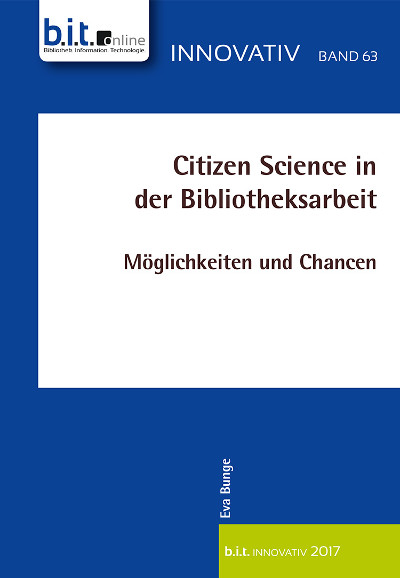
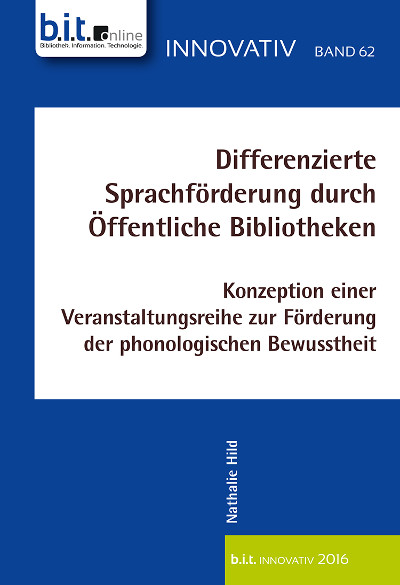
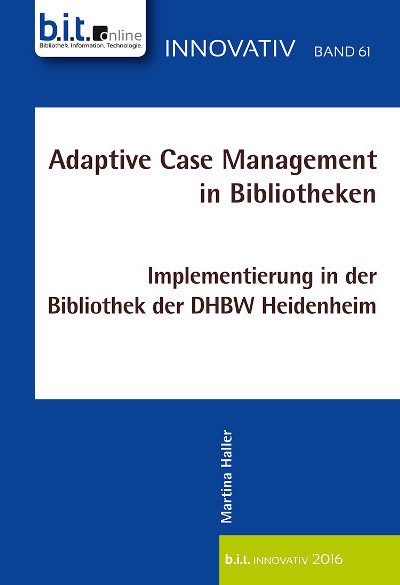
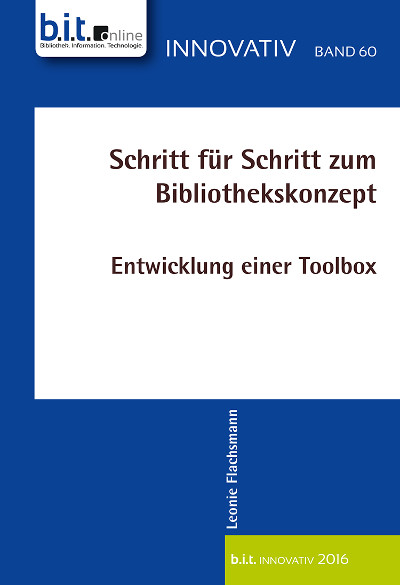
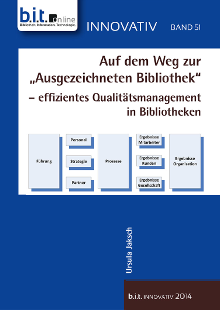
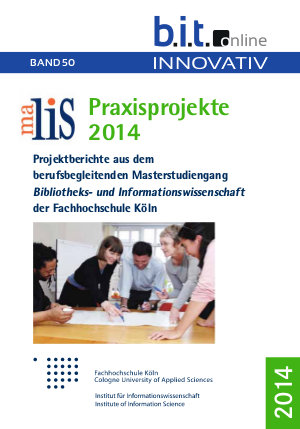
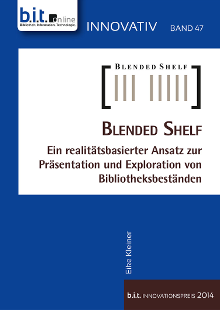
Band 66: Tina Schurig Band 65: Christine Niehoff Band 64: Eva May Band 63: Eva Bunge Band 62: Nathalie Hild Band 61: Martina Haller Band 60: Leonie Flachsmann Band 59: Susanne Göttker Band 58: Georg Ruppelt Band 57: Karin Holste-Flinspach Band 56: Rafael Ball Band 55: Bettina Schröder Band 54: Florian Hagen Band 53: Anthea Zöller Band 52: Ursula Georgy Band 51: Ursula Jaksch Band 50: Hermann Rösch (Hrsg) Band 49: Lisa Maria Geisler Band 48: Raphaela Schneider Band 47: Eike Kleiner
Bestellen Sie jetzt online!
18. März 2026
  WEITERE NEWS
Aktuelles aus
L
ibrary
Essentials

In der Ausgabe 02/2026 (März 2026) lesen Sie u.a.:

  • Seniorinnen und Senioren entdecken soziale Netzwerke – Chancen und Aufgaben für Bibliotheken
  • Chatbots im Auskunftsdienst wissenschaftlicher Bibliotheken
  • Bibliotheken unter Druck – Was der Hamburger Sparkurs über den Zustand
    des Wissenschaftssystems verrät
  • Die „Big Three“ der Wissenschaftsinformation – Web of Science, Scopus und OpenAlex im systematischen Vergleich
  • Der Strukturwandel im italienischen Buchmarkt – Lehren für Europa,
    die Leseförderung, den Buchhandel
    und Künstliche Intelligenz
  • GenAI in der Hochschulbildung –
    Wer forscht weltweit zu ChatGPT und Co.?
  • Jenseits des Akronyms –
    Wie wissenschaftliche Bibliotheken DEI
    unter politischem Druck neu verankern
  • Kann Bibliotherapie helfen, die Krisen
    der Gegenwart zu bewältigen?
  • Web-Barrierefreiheit pragmatisch umsetzen – Kleine Schritte mit großer Wirkung
  • Wenn die KI die Nachrichten auswählt, verändert sich die öffentliche Wahrnehmung
  • Zwischen Plattformökonomie und kulturellem Gedächtnis – Hat das physische Medium noch eine Zukunft?
u.v.m.
  fachbuchjournal
2009 bis 2023

The Ex Libris Digital Preservation System Goes Live
at the National Library of New Zealand

The Digital Preservation System is the keystone of the National Library of New Zealand project to preserve the nation’s cultural heritage for the benefit of future generations

Jerusalem, Israel and Wellington, New Zealand – Ex Libris™ Group is pleased to announce that after a successful beta-testing period at the National Library of New Zealand (NLNZ), version 1.0 of the Ex Libris Digital Preservation System has gone live as scheduled.

As our culture becomes increasingly digital, the need to store and preserve digital information in a secure and trusted manner gains greater importance. The Digital Preservation System, developed in collaboration with the NLNZ, provides a complete, first-of-its-kind solution enabling academic, research, and national libraries to maintain the usability and integrity of their digital resources in perpetuity. Development of the system was also supported through collaborative work with an international peer review group.

Based on the Open Archival Information System (OAIS) model and conforming to trusted digital repository (TDR) requirements, the Ex Libris Digital Preservation System provides institutions with the infrastructure and technology needed to preserve and facilitate access to the collections under their guardianship.

The understanding that preservation and access belong together—that they are not mutually exclusive entities—dictated a design in which preservation support is built directly into the platform rather than serving as an add-on feature. This end-to-end solution offers full security, auditing, replication, and integrity checks that maintain the safety of collections over time, while persistent identifier tools and standard APIs (Application Programming Interface) enable institutions to make their collections easily accessible to users.

The National Library of New Zealand is using the highly configurable and scalable Digital Preservation System to collect a range of digital material types from a wide variety of sources (such as publishers, government agencies, and Web sites in the New Zealand domain); to review, validate, and organize such materials; and to make them available to end users in accordance with user access rights. Risk analysis and conversion tools enable the system to provide meaningful access to the digital objects over time. The integration of the system with other National Library of New Zealand applications is facilitated by a built-in software development kit and the suite of APIs.

December 2008 will see the general release of the Digital Preservation System by Ex Libris Group.

“Collaborating with Ex Libris to make the Digital Preservation System has been an exciting development for the National Library,” commented Penny Carnaby, chief executive of the National Library of New Zealand. “Version 1.0 of the system was delivered on schedule, and we are confident that the Digital Preservation System will meet the long-term needs of our institution. We are looking forward to working with Ex Libris on future product versions which will complete our full set of requirements.”

The Ex Libris Digital Preservation System will play a central role in helping institutions ensure that their valuable digital collections remain discoverable and accessible in the future,” explained Matti Shem Tov, president and CEO of Ex Libris Group. “It is an honor to have worked in partnership with the forward-thinking staff at the National Library of New Zealand and the peer review group. Our collective experience has yielded a solution that focuses on the current and future preservation needs of libraries—important guardians of human intellectual and cultural heritage,” added Shem Tov.

About the National Library of New Zealand
The goal of the National Library of New Zealand is to enrich the cultural and economic life of New Zealand and its interchange with other nations by collecting, preserving, and protecting documents, particularly those related to New Zealand; making these accessible in a manner consistent with their status as documentary heritage; and working in collaboration with local and international institutions with similar purposes. National Library of New Zealand, see
http://www.natlib.govt.nz
http://www.exlibrisgroup.com