















































INNOVATIV
Band 79: Janet Wagner Band 78: Philip Franklin Orr Band 77: Carina Dony Band 76:
Linda Freyberg
Sabine Wolf (Hrsg.)
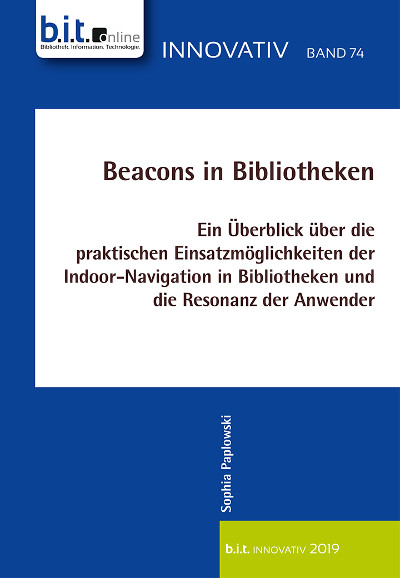
Band 75: Denise Rudolph Band 74: Sophia Paplowski Band 73: Carmen Krause Band 72:
Katrin Toetzke
Dirk Wissen
Band 71: Rahel Zoller Band 70: Sabrina Lorenz Band 69: Jennifer Hale Band 68:
Linda Schünhoff
Benjamin Flämig
Band 67:
Wilfried Sühl-Strohmenger
Jan-Pieter Barbian
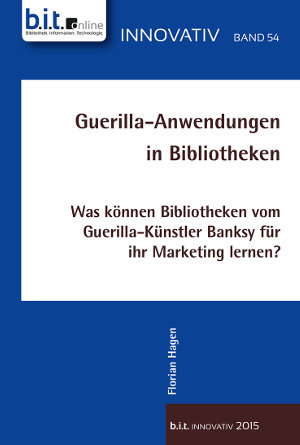
Band 66: Tina Schurig Band 65: Christine Niehoff Band 64: Eva May Band 63: Eva Bunge Band 62: Nathalie Hild Band 61: Martina Haller Band 60: Leonie Flachsmann Band 59: Susanne Göttker Band 58: Georg Ruppelt Band 57: Karin Holste-Flinspach Band 56: Rafael Ball Band 55: Bettina Schröder Band 54: Florian Hagen Band 53: Anthea Zöller Band 52: Ursula Georgy Band 51: Ursula Jaksch Band 50: Hermann Rösch (Hrsg) Band 49: Lisa Maria Geisler Band 48: Raphaela Schneider Band 47: Eike Kleiner
Bestellen Sie jetzt online!
4. November 2026
  WEITERE NEWS
Aktuelles aus
L
ibrary
Essentials

In der Ausgabe 08/2026 (Oktober 2026) lesen Sie u.a.:

  • Mehrheit der Jugendlichen befürwortet Social-Media-Verbot
  • Zwischen Überforderung und Verantwortung:
    Was Eltern über die digitale Welt ihrer Kinder wissen und was nicht
  • Der Informationsschock und
    die Zukunft des Bibliotheksberufs
  • Tim Coates analysiert 15 Jahre
    IMLS-Daten zu US-amerikanischen öffentlichen Bibliotheken
  • Was der Clarivate-Bericht 2026 über
    den KI-Stand in Bibliotheken verrät
  • Wie öffentliche Bibliotheken in den USA
    und Kanada mit KI-Policies umgehen
  • Schadet das digitale Ausleihen von Bibliotheken dem Buchmarkt?
  • PEN America dokumentiert eskalierende Zensur in US-amerikanischen
    öffentlichen Bibliotheken
  • Wie sich das Publikationsverhalten wissenschaftlicher Bibliothekar:innen wandelt
  • US-Hochschulbibliotheken fördern zunehmend das Wohlbefinden
    von Studierenden
  • Klage gegen Elsevier auf Rückzug einer Studie geht in Richtung Gerichtsverhandlung
  • Unabhängige Buchläden in Hongkong
u.v.m.
  fachbuchjournal
2009 bis 2023

Springer Nature launches updated AI policies
and guidance to support responsible AI use

New framework provides practical, future-focused guidance for authors,
reviewers and editors in an evolving AI landscape

As AI continues to evolve, researchers, reviewers and editors are increasingly looking for clear, practical guidance on AI use, with more than 70% seeing publisher guidance as increasingly important. In response, Springer Nature has updated its AI editorial policies and is providing practical guidance to support the responsible and transparent use of AI across the research publishing lifecycle.

Building on the publisher’s AI principles of accountability, transparency and human oversight, alongside the core principle of confidentiality in editorial assessment, the new framework sets out a shared set of principles, supported by tailored guidance to help each group apply them in their day-to-day research and editorial activities. Rather than focusing on whether AI has been used, the updated policies consider:

  • how AI has been used
  • the potential impact of that use
  • the level of risk introduced
  • whether appropriate human oversight has been maintained

Importantly, the framework recognises that not all uses of AI are the same. Some uses may support efficiency, clarity or accessibility and come with relatively limited risk – such as improving language, cleaning data, or structuring comments. Others may influence interpretation, evaluation or decision-making – such as suggesting methods, identifying patterns in data or helping interpret results – and therefore require greater assessment, human oversight and transparency.

AI use that would replace accountable human judgement or compromise the integrity of the publishing process – such as using AI to generate conclusions or delegating peer review to an AI tool – continues to not be permitted.

As AI becomes embedded in research and publishing workflows, disclosure is key. By consistently requiring appropriate declarations of AI use, the policies support transparency and informed assessment, while acknowledging that many forms of responsible AI-assisted activity are now routine parts of the scholarly process.

Harsh Jegadeesan, Chief Publishing Officer at Springer Nature, commented:

“We believe AI can accelerate discovery and improve research communication when used responsibly. Our updated AI policy guidance makes clear that human accountability remains the cornerstone of research and publishing and helps researchers use AI responsibly, transparently and with confidence.”

Ellie Gendle, Head of Journals Policy at Springer Nature, added:

"AI use in research and research communications is evolving continuously, and as it continues to become more embedded it is increasingly important to be able to confidently distinguish between different use cases. Policies and guidance that apply an assessment and management approach to AI use can help academics to navigate this evolution responsibly, transparently and with greater confidence, whilst ensuring clear protections where greater risks to integrity or accountability may arise.

Our new guidance continues to make clear that AI is not a substitute for human judgement and accountability, whilst recognising that, assuming it is done with care, responsibility and appropriate disclosures, AI can and will be applied in an increasing range of research and publishing activities.”

The policies will be reviewed periodically to ensure they remain aligned with emerging developments, regulations, community expectations and publishing practices.

https://group.springernature.com/gp/group/ai/ai-guidance-for-our-researchers-and-communities