





































INNOVATIV
Band 79: Janet Wagner Band 78: Philip Franklin Orr Band 77: Carina Dony Band 76:
Linda Freyberg
Sabine Wolf (Hrsg.)
Band 75: Denise Rudolph Band 74: Sophia Paplowski Band 73: Carmen Krause Band 72:
Katrin Toetzke
Dirk Wissen
Band 71: Rahel Zoller Band 70: Sabrina Lorenz Band 69: Jennifer Hale Band 68:
Linda Schünhoff
Benjamin Flämig
Band 67:
Wilfried Sühl-Strohmenger
Jan-Pieter Barbian
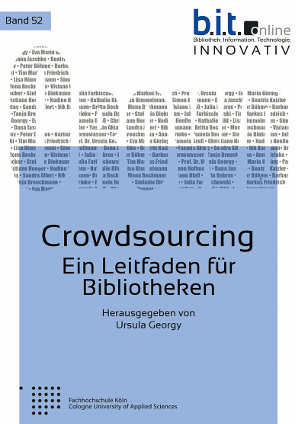
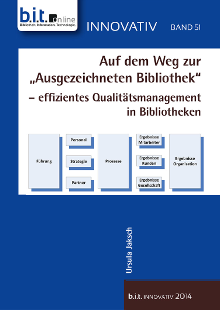
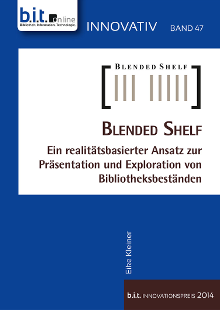
Band 66: Tina Schurig Band 65: Christine Niehoff Band 64: Eva May Band 63: Eva Bunge Band 62: Nathalie Hild Band 61: Martina Haller Band 60: Leonie Flachsmann Band 59: Susanne Göttker Band 58: Georg Ruppelt Band 57: Karin Holste-Flinspach Band 56: Rafael Ball Band 55: Bettina Schröder Band 54: Florian Hagen Band 53: Anthea Zöller Band 52: Ursula Georgy Band 51: Ursula Jaksch Band 50: Hermann Rösch (Hrsg) Band 49: Lisa Maria Geisler Band 48: Raphaela Schneider Band 47: Eike Kleiner
Bestellen Sie jetzt online!
25. März 2026
  WEITERE NEWS
Aktuelles aus
L
ibrary
Essentials

In der Ausgabe 02/2026 (März 2026) lesen Sie u.a.:

  • Seniorinnen und Senioren entdecken soziale Netzwerke – Chancen und Aufgaben für Bibliotheken
  • Chatbots im Auskunftsdienst wissenschaftlicher Bibliotheken
  • Bibliotheken unter Druck – Was der Hamburger Sparkurs über den Zustand
    des Wissenschaftssystems verrät
  • Die „Big Three“ der Wissenschaftsinformation – Web of Science, Scopus und OpenAlex im systematischen Vergleich
  • Der Strukturwandel im italienischen Buchmarkt – Lehren für Europa,
    die Leseförderung, den Buchhandel
    und Künstliche Intelligenz
  • GenAI in der Hochschulbildung –
    Wer forscht weltweit zu ChatGPT und Co.?
  • Jenseits des Akronyms –
    Wie wissenschaftliche Bibliotheken DEI
    unter politischem Druck neu verankern
  • Kann Bibliotherapie helfen, die Krisen
    der Gegenwart zu bewältigen?
  • Web-Barrierefreiheit pragmatisch umsetzen – Kleine Schritte mit großer Wirkung
  • Wenn die KI die Nachrichten auswählt, verändert sich die öffentliche Wahrnehmung
  • Zwischen Plattformökonomie und kulturellem Gedächtnis – Hat das physische Medium noch eine Zukunft?
u.v.m.
  fachbuchjournal
2009 bis 2023

Audio-Described Video Improves Accessibility for Academic Video Online Users

ProQuest adds audio descriptions to its most popular streaming video titles,
accommodating visually impaired users with new on-demand service

ProQuest has announced the addition of audio descriptions to its most-watched video titles in the Academic Video Online and ProQuest One™ Academic platforms, making educational streaming video more accessible to visually impaired users. Audio description adds narration to a video, describing its on-screen images for the benefit of those with visual impairments. ProQuest has already added audio descriptions to its most popular titles, and will continue to add more upon request by a library at no charge.

"I really appreciate this service – it demonstrates a strong commitment to equity and accessibility,” said Charlotte Innerd, Head of Collection Development and Acquisitions at Wilfrid Laurier University Library. “This is going to be a great resource for students who normally run into impediments to their learning by not having access to videos, or not having access in a timely manner. This will address their individual needs and help us build a library of accessible videos." Audio-described video is the latest feature to improve accessibility of content within Academic Video Online. Searchable, scrolling transcripts are also available for most of the database’s nearly 70,000 titles, assisting those with hearing impairments and language obstacles.

“Having videos for certain courses captioned, transcribed and audio-described gives all students the ability to learn from and more fully experience these videos,” said Melanie Eley, Accessibility Coordinator at UNC Greensboro. “Those of us in the accessibility field dream of this. It’s a perfect model for how universities and multimedia providers can work together to produce quality products that are essential for users with different abilities, but useful to all.”

“ProQuest built this feature – a first for the academic streaming video market – after collaboration with and feedback from many of our trusted library partners. They believe, and we agree, that educational products need to be accessible to all students and faculty, regardless of ability,” said Sarah Brennan, Video Product Manager at ProQuest. “Accessibility is a key piece of our product development strategy, and this new feature is one example of how we’re working with libraries to accommodate more users.”

See a sample of audio-described video.

Learn more about audio-described video on our blog – or see how to request it (some limits may apply).

The Academic Video Online platform is the most comprehensive video subscription available to libraries. It includes nearly 70,000 titles spanning a wide range of subject areas, and supports remote learning with unlimited access, free media hosting and easy integration with learning management systems. All Academic Video Online titles are also available through the ProQuest One™ Academic platform.

www.proquest.com